

Montana is home to one of the most beautiful national parks in America. Dubbed the “Crown of the Continent”, Glacier National Park is a bucket list destination for many people around the world. This magnificent park features jagged mountain peaks, gorgeous alpine lakes, and meadows covered in colorful wildflowers.
But the Treasure State has a few other parks within its borders that are worth visiting. While these other parks are not noteworthy for their beauty, they make up for it with their fascinating history. This state has several national monuments and historical sites that preserve Native American history and the state’s cowboy culture.
Whether you’re looking for a place to soak in stunning views, get active on an epic adventure, or road trip to places where you can learn more about the past, Montana has something for you!
Here are five national park sites in Montana that you should put on your bucket list. National parks are listed first, followed by national monuments, historic sites, and national recreation areas. The list is in alphabetical order.
*Note that part of Yellowstone National Park is located in Montana but equates to only 3% of the park, so for the purposes of this article it won’t be included in this list.
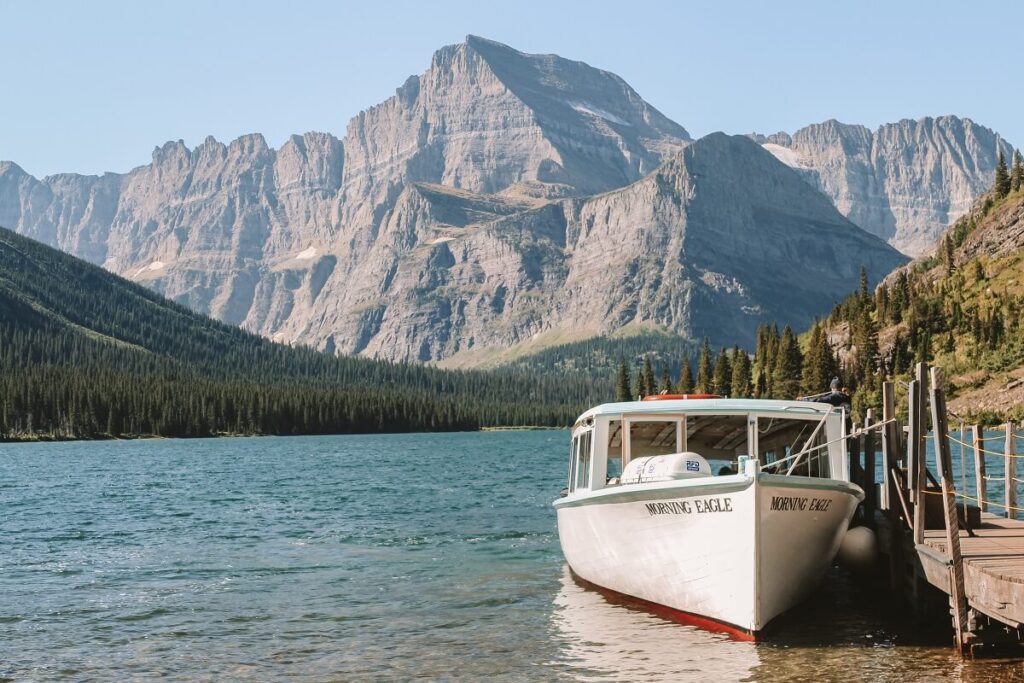
Glacier National Park
Glacier National Park encompasses parts of two mountain ranges, more than 130 named lakes, over 1,000 species of plants, and even more species of animals. This national park located in northwestern Montana offers visitors numerous ecosystems to explore ranging from prairie to tundra. It is considered to be one of the most beautiful national parks in the U.S. and a destination that you must see at least once in your lifetime.

Big Hole National Battlefield
Big Hole National Battlefield preserves a battlefield in Dillon, Montana, where the most violent confrontation occurred between the Nez Perce and U.S. Government. In 1877, the Nez Perce fought against the U.S. Army’s 7th Infantry Regiment while attempting an escape to Canada to avoid being forced onto a reservation. Battle of the Big Hole was the end of the five month conflict known as the Nez Perce War.

Fort Union Trading Post National Historic Site
Fort Union Trading Post National Historic Site is a partial reconstruction of the most important fur trading post on the upper Missouri River. From 1829 to 1867, Fort Union was the central and busiest trading post on the upper Missouri and instrumental in developing the fur trade in Montana. The site sits two miles from the confluence of the Missouri River and its tributary, the Yellowstone River.

Grant-Kohrs Ranch National Historic Site
Grant–Kohrs Ranch National Historic Site was created in 1972 to commemorate the Western cattle industry from its 1850s inception through recent times. The original ranch was established in 1862 by a Canadian fur trader named Johnny Grant at Cottonwood Creek, the future site of Deer Lodge, Montana. The ranch was later expanded by cattle baron Conrad Kohrs (1866–1920). This historic site is maintained today as a working ranch by the National Park Service.
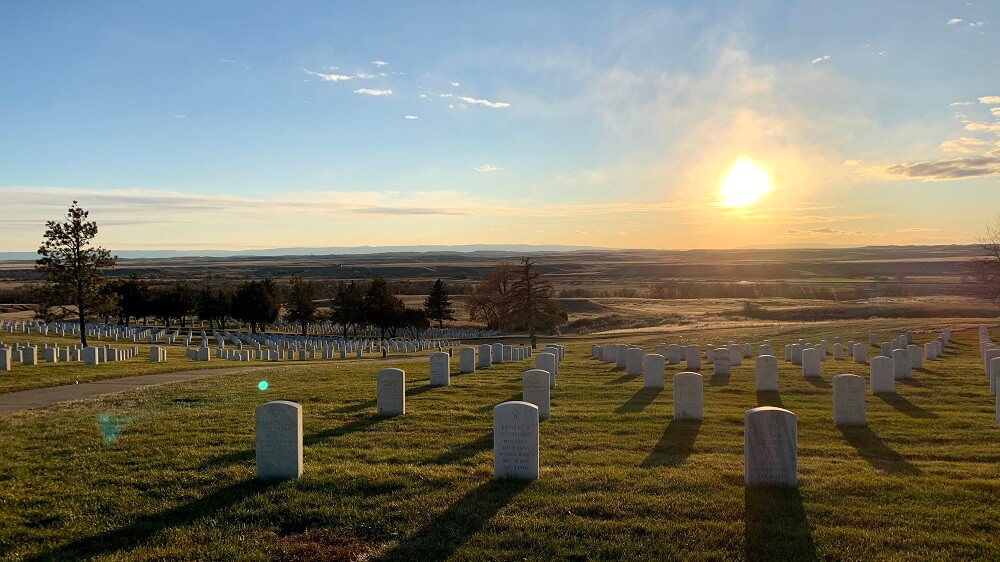
Little Bighorn Battlefield National Monument
Little Bighorn Battlefield National Monument preserves the site of Battle of the Little Bighorn which happened in 1876 near Crow Agency, Montana. The park serves as a memorial those who fought in the battle including George Armstrong Custer’s 7th Cavalry, the Lakota-Northern Cheyenne and Arapaho force. Custer National Cemetery situated on the battlefield is part of the national monument.
View other national parks and monuments in neighboring states: National Parks in Idaho