
New Orleans
New Orleans aka ‘The Big Easy’, is known for it’s 24-7 nightlife, vibrant music scene and Creole cuisine inspired by French, African and American cultures. The city sits beside the Mississippi River and close to the Gulf of Mexico which means the weather is heavily influenced by the warm ocean to the south that can bring intense tropical storms. This means you should think about when to plan your visit carefully and whether you might want to avoid visiting during hurricane season which is most likely to happen between July and September.
The best time of year to visit in regards to weather is winter and spring. Some of the most popular months to visit include February for Mardi Gras, May for Jazz Fest, and October for Halloween festivities and Voodoo Music Festival. This is when hotel rooms can be booked out months in advance and room rates are at their highest.
Top Attractions In New Orleans
What you can’t miss in New Orleans
 Bourbon Street
 Cafe Du Monde
 STEAMBOAT NATCHEZ
 AUDUBON BUTTERFLY GARDEN
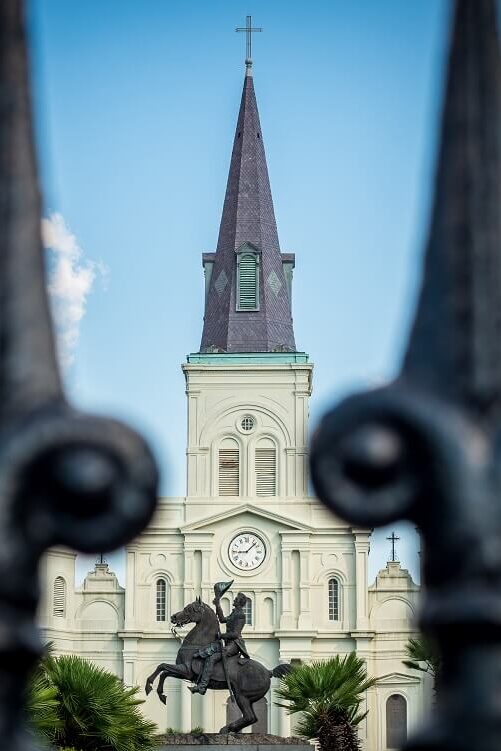 St Louis Cathedral
Things To See In New Orleans
Most people usually plan to spend only a day or two in New Orleans as a weekend getaway or a one-day stopover on their road trip but there is actually so much to see and do here that you could easily spend at least a week.
The priority of most visitors to New Orleans is to tour the French Quarter and experience Bourbon Street. Lively bars line Bourbon Street and there are so many cafes and amazing restaurants in the vicinity that you may not ever leave the French Quarter district. Besides the food, drinks, and incredibly ornate architecture that can be found in this area, be sure to visit Jackson Square and see St Louis Cathedral, take a stroll through the French Market, learn about the city’s history at the Cabildo and Presbytere, and take a walk along the Mississippi waterfront.
Not too far in Faubourg Marigny is Frenchmen Street which is home to popular bars and clubs that offer live jazz and blues music like The Spotted Cat.
Outside of the French Quarter, take a trip to the Garden District which is known for it’s well preserved antebellum Italianate and Victorian mansions and tour Lafayette Cemetery No. 1. The Garden District sits along Magazine Street which has some really good eateries and boutique stores.
City Park which is twenty minutes north of the French Quarter is home to the New Orleans Museum of Art, Louisiana Children’s Museum, and the Singing Oak Tree. The park is beautiful to take a stroll around, particularly in summer. To the west of downtown is Audubon Park which is where you will find the Audubon Zoo, a place the kids will love!



Where To Stay
If you want to be close to the action you probably want to be in the French Quarter. Staying in the French Quarter means you will easily be able to walk back to your hotel room from a night out at the bar or restaurant. This will save you the hassle of figuring out transport back to your lodging or walking around late night in other parts of New Orleans that might not be as safe. However, many people do complain about how noisy it can be staying in the French Quarter.
A good option that is still within walking distance of the French Quarter but much quieter is to stay in the downtown area (Central Business District). This area has a lot of nice hotels to choose from and plenty of good restaurants around.
One of the cheapest area’s to stay in is East New Orleans where you can find a range of really cheap hotels like the Super 8, Rodeway Inn and the Days Inn By Wyndham. Be aware that this area can be unsafe, especially at night. Also, many of the hotels around here have a lot of negative reviews on TripAdvisor such as guests having items stolen from their rooms, to bed bugs, to having their cars broken into. The best place to find budget accommodation in New Orleans is to check Airbnb which has plenty of nice rooms and guesthouses in other parts of town.
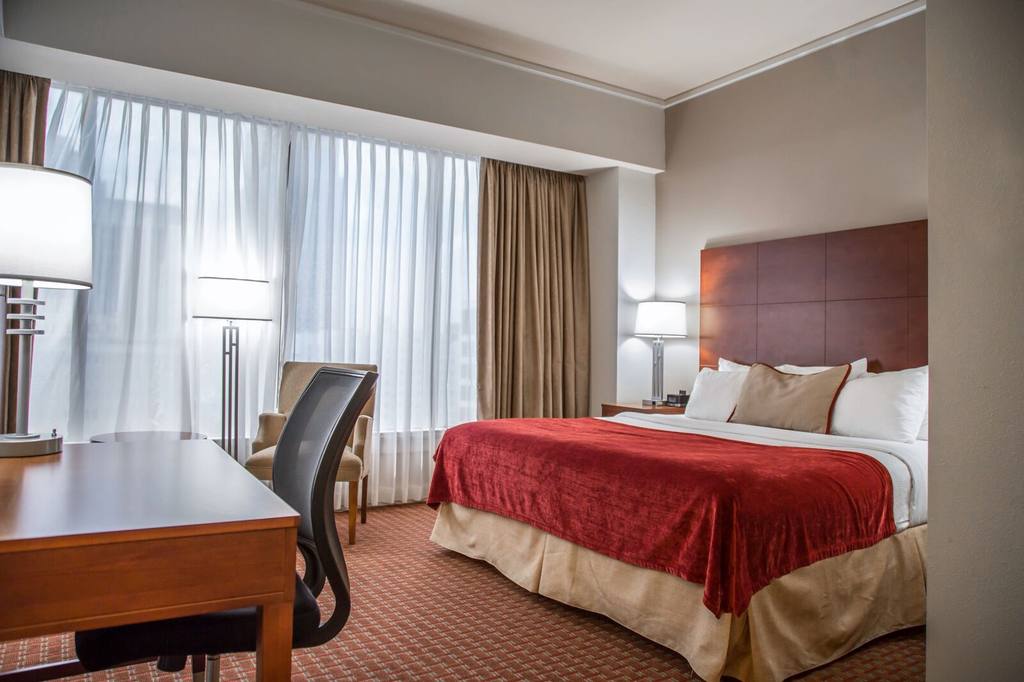
Popular Hotels In New Orleans




Getting To New Orleans
Getting To New Orleans By Air – The main airport in New Orleans is Louis Armstrong New Orleans International Airport which is located 15 miles west of downtown and Bourbon Street. The trip between the airport and the Bourbon Street/downtown area is approximately thirty minutes.
You can organize a shuttle bus into the city with Go Airport Shuttle which offers rides between the airport and hotels in downtown for $24 one-way. Otherwise, you can catch the Airport-Downtown Express (E-2) public bus which runs between the airport and downtown New Orleans via Airline Drive. The trip takes about 50 minutes and the bus fare is $2 per person. You can find the bus stop outside of entrance 7 on the 2nd level of the airport.
Getting To New Orleans By Train – Amtrak has three routes connecting New Orleans to Chicago, New York and Los Angeles. The Sunset Unlimited runs between Los Angeles and New Orleans stopping at Palm Springs, San Antonio and Houston on the way. The Crescent runs between New York and New Orleans with stop in North Carolina, Georgia and Alabama. The City Of New Orleans operates between Chicago and New Orleans with stops in Memphis, Tennessee and Jackson, Mississippi.
Getting To New Orleans By Bus – It is possible to get to New Orleans by bus using the Greyhound or Megabus bus service. Greyhound serves cities and towns all across America and arrives in downtown New Orleans stopping at Loyola Avenue. You can also reach New Orleans from Atlanta (Georgia), Mobile and Montgomery (Alabama), Baton Rouge (Louisiana), and Houston or San Antonio (Texas) on the Megabus bus company who offer seats at very good prices.

Getting Around New Orleans
The most popular, fun and scenic way to get around New Orleans is by using the St Charles Avenue Streetcar. These iconic green cars run 24 hours a day and will transport you anywhere between Uptown and Downtown New Orleans along St Charles Avenue.
There are five different streetcar lines in total that can take you to most of the city’s top attractions and area’s like the Garden District, City Park, Audubon Zoo, through to Mid-City and even along the waterfront of the French Quarter. You can also use the city bus service which features a more extensive route.
One-way fares on streetcars (and buses) cost $1.25 per person or you can purchase a one-day Jazzy Pass for $3 which gives you unlimited rides all day. There are also three-day, five-day and thirty-one day pass options. You can buy the Jazzy Pass on the RTA website, at RTA ticket vending machines, or at select vendor’s such as Walgreen’s.
Weather In New Orleans
New Orleans is well known for it’s long, hot and humid weather between April and September but you might be surprised to find out that it can get quite chilly starting in the month of October. While temperatures can soar into the 90’s during the summer months, winters can get bone-chillingly cold and drop into the 30’s and on rare occasions into the upper 20’s.
The best time of year to visit is between February and May which coincides with the annual Mardi Gras festival or between September and November if you want to avoid the extreme heat and hurricane season.
Summer – Summer’s in New Orleans are long, hot, and oppressively humid. While temperatures over 100 degrees Fahrenheit are not usual for New Orleans, they do normally hover in the 90’s from June to September. Even at night, temperatures remain in the 70’s during summer months. Afternoon thunderstorms are common at this time of year with the city receiving about 20 inches of rain during the three months of summer.
Winter – Winters are short, cool and can be very windy. Average winter temperatures in New Orleans are usually between 46 and 64 degree’s. It is best to be prepared with warm weather clothing as temperatures can unexpectedly drop into the low 30’s. The city gets about 14 inches of rain during the three months of winter.
Spring – Spring is generally very warm with average high temperatures reaching the upper 70’s. There can be the occasional cold front so bring layers.
Autumn – Temperatures begin to fall in Autumn and are usually in the low to high 70’s and by the end of October the weather can be quite cold, especially at night. Autumn is the driest season of the year.
Autumn – Temperatures begin to fall in Autumn and are usually in the low to high 70’s and by the end of October the weather can be quite cold, especially at night. Autumn is the driest season of the year.