
If you’re driving the Salmon River Scenic Byway in Idaho, keep your eyes peeled for Rocky Mountain bighorn sheep. Between Challis and Salmon, it’s common to spot these majestic animals roaming the rugged canyon terrain.
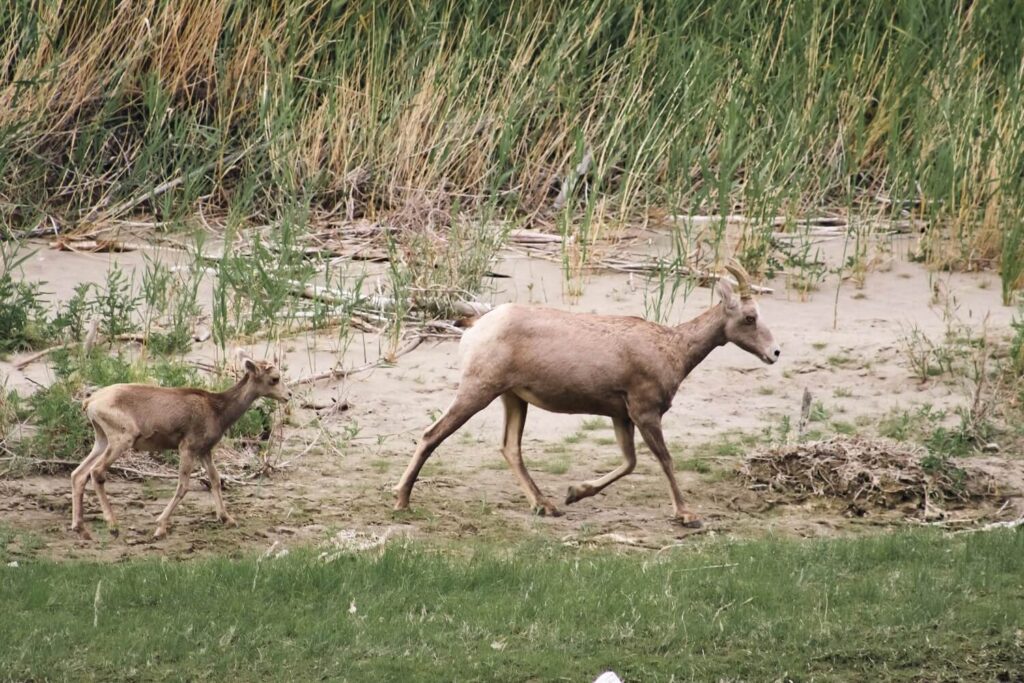
As a wildlife enthusiast, I’m always scanning the roadsides, hillsides, and mountain slopes on our road trips—hoping for a glimpse of North America’s iconic animals. For me, spotting wildlife is one of the best parts of traveling. It deepens your connection to the places you visit, offering a unique insight into the local landscape and ecosystem.
On this particular trip along Idaho’s stunning Salmon River Scenic Byway, we were heading north in search of a free riverside campsite after leaving Stanley. That’s when I suddenly spotted a small herd of Rocky Mountain bighorn sheep grazing near the river’s edge.
We quickly pulled over onto a narrow shoulder—there weren’t many safe spots to stop along this stretch, but luckily, traffic was light. We grabbed our camera and binoculars and carefully crossed the road for a closer look.
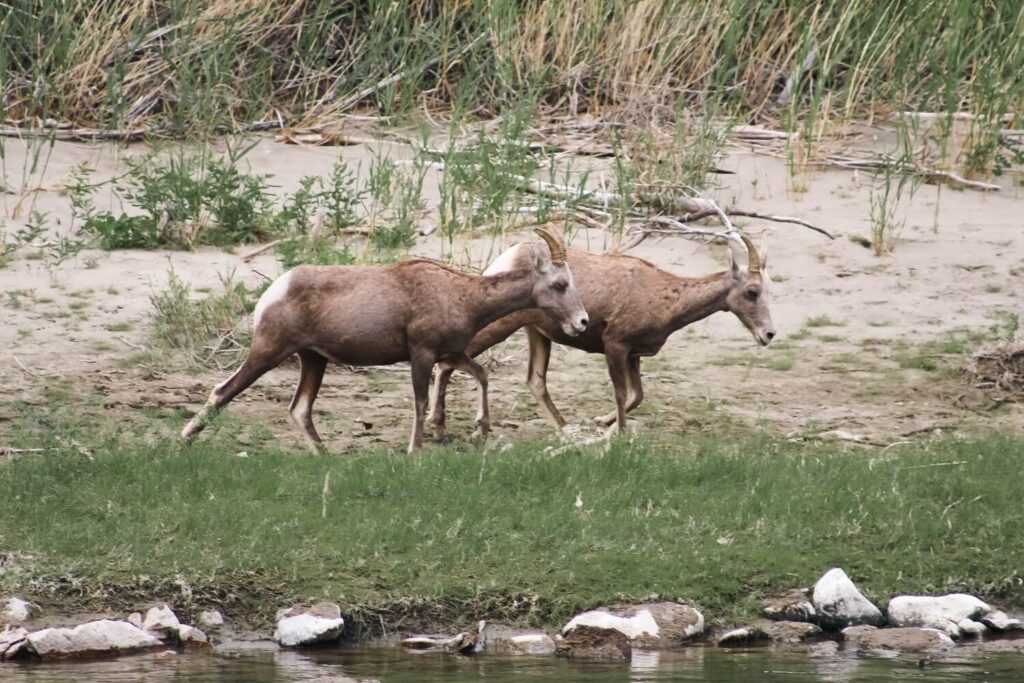
Although we’ve seen bighorn sheep in other places—especially in Glacier National Park, where we’ve encountered them both from afar and far too close on hiking trails—this was our first time seeing them in Idaho. It was an incredible surprise to find them right alongside the road.
About fifteen sheep were slowly making their way north, nibbling on grass and wandering along the riverbank. After a while, they settled down to rest.
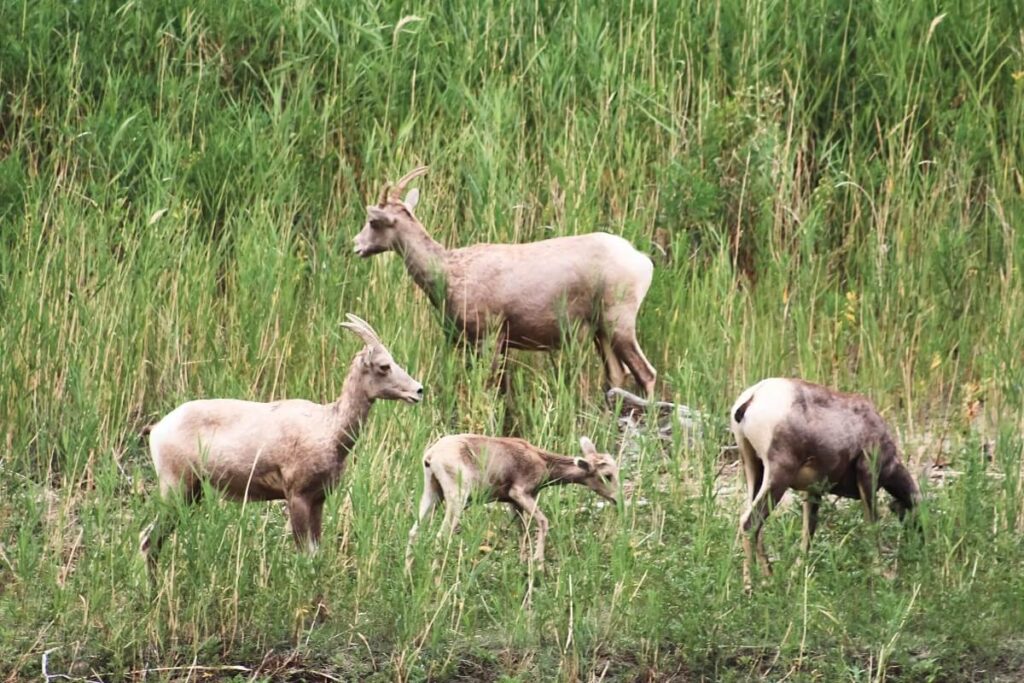
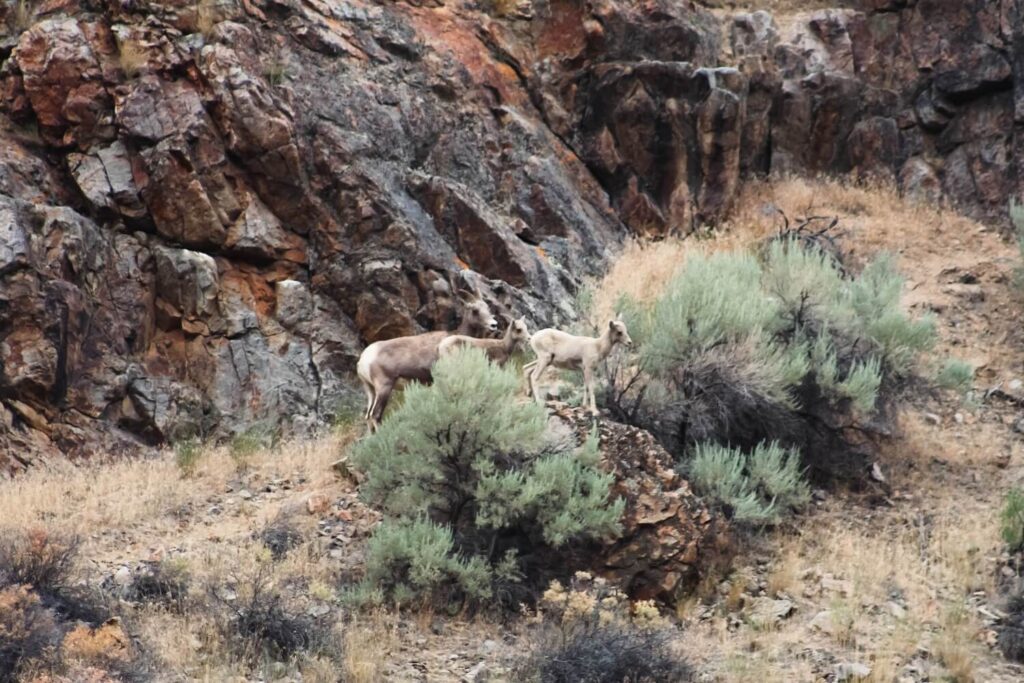
One mother and her two lambs especially caught our attention. The trio broke away from the group and began climbing the steep mountainside across from us. Halfway up, they paused to rest, joined briefly by a curious crow perched nearby.

We spent at least thirty minutes watching them, taking photos, and simply enjoying the quiet beauty of the moment before continuing our road trip through Central Idaho.
Spotting wildlife like bighorn sheep along the Salmon River Scenic Byway is one of those unexpected travel moments that stays with you long after the trip is over. It’s a reminder to slow down, take in your surroundings, and appreciate the wild beauty of Idaho.
Whether you’re an avid wildlife watcher or just passing through, keep your eyes peeled—you never know when you might catch a glimpse of these incredible animals along the rugged cliffs and riverside meadows of Central Idaho.
Tips for spotting Bighorn Sheep along Salmon River Scenic Byway
- Drive Slowly & Stay Alert: Bighorn sheep often graze close to the road. Drive carefully and keep an eye on the hillsides, cliffs, and riverbanks.
- Look for Steep, Rocky Areas: These animals prefer rugged, rocky terrain near the river where they can easily climb to escape predators.
- Bring Binoculars: While you can sometimes spot them near the road, binoculars make it easier to spot them higher up on the cliffs or across the river.
- Early Morning or Late Afternoon: Wildlife tends to be more active during cooler parts of the day—early mornings and late afternoons are your best bet.
- Pull Over Safely: Should you spot them, find a safe place to pull over before exiting your vehicle. Avoid stopping on blind corners or narrow shoulders.
- Be Respectful: Keep a safe distance and never approach or feed wildlife. Observe quietly so you don’t disturb them.
- Pack a Camera: You’ll want to capture the moment—just remember to watch the animals with your eyes too, not just through the lens!
Are Rocky Mountain Bighorn Sheep a threatened species?
Rocky Mountain Bighorn Sheep are facing serious challenges across North America. While not officially listed as endangered, their populations are declining, and many herds remain small and vulnerable.
One of the biggest threats to Bighorn Sheep is disease—specifically, pneumonia caused by bacteria transmitted from domestic sheep and goats. Even brief contact between domestic and wild sheep can spark devastating outbreaks, wiping out entire herds in some cases.
How you can help protect Bighorn Sheep
Several organizations are working to protect Bighorn Sheep and their fragile habitat. One example is Advocates for the West, a non-profit environmental law group that defends public lands, waterways, and wildlife throughout the western U.S.
Their legal efforts have helped protect Bighorn Sheep in areas like Hells Canyon, the Payette National Forest, and the Salmon River Canyon by limiting domestic sheep grazing in critical habitats.
If you’d like to help, you can support their work through donations or by volunteering. Every effort makes a difference in keeping wild places—and wildlife—thriving.