
Is Craters Of The Moon National Monument on the itinerary for your next road trip? If so, you may be wondering what are the best things to do at Craters of the Moon and how much time should you dedicate to visiting the park.
This list of the top things to do at Craters of the Moon will give you a quick overview of must do activities, in which you can decide for yourself if you want to do them or whether you have enough time on your itinerary to cover them.
Craters of the Moon is located along U.S. Highway 20 between the small Idaho towns of Carey and Arco. It is a popular detour for travelers driving to Grand Teton National Park and Yellowstone National Park.
Because the park is only 90 miles from Twin Falls, it makes for a perfect day trip destination from Twin Falls. Coming from Boise as a day trip is also possible, but because Boise is 170 miles from Craters of the Moon, it is best visited as a weekend getaway from Boise.
The park protects roughly 21,618 hectares of volcanic formations and lava flows on the northern edge of the Snake River Plain in Southern Idaho but only a small portion of the park is accessible by vehicle, therefore the majority of highlights at this park can easily be covered in one day.

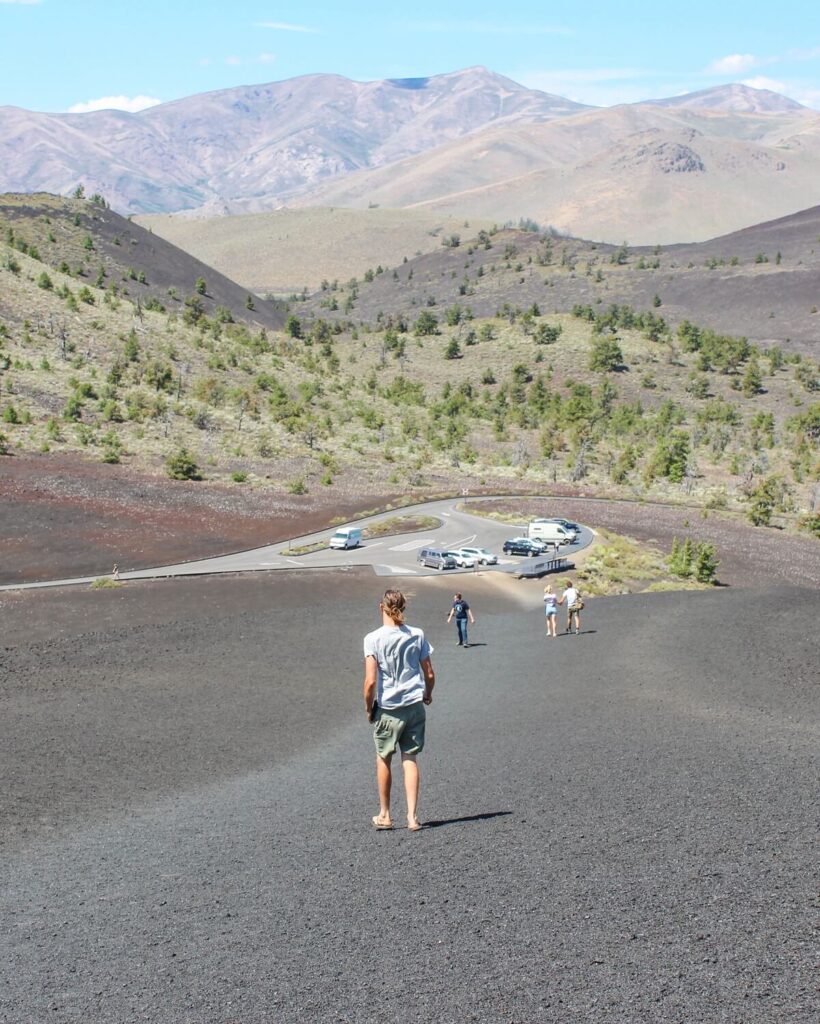
What you can expect to see here is unlike anywhere else in Idaho. As a matter of fact, this national park is unlike any other national park in the United States. It is devoid of forests, craggy mountain peaks, and lakes, but this doesn’t make it any less beautiful or interesting.
On the contrary, the landscape here is fascinating and has such an interesting history geologically speaking. There is also something eerily beautiful about this desolate environment.
As U.S. president Calvin Coolidge described the park upon signing the executive order to create the monument in 1924 put it, “this area contains many curious and unusual phenomena of great educational value and has a weird and scenic landscape peculiar to itself”.
Take a look at some of the weird and scenic attractions inside Craters of the Moon that you must see and what the top things to do are.
1. Stop In At The Visitor Center

First things first! No stop to any U.S. national park should start without stopping by its visitor center. The Craters Of The Moon National Monument Visitor Center has some great exhibits that explain the geologic history of the park.
Inside the Visitor Center is the National History Association Bookstore and Museum which has a decent collection of book, gifts, and other cool Craters of the Moon merchandise.
During the summer an Information Tent will be set up in front of the Visitor Center with park rangers on duty to provide park and trail information, maps, and cave permits.
The tent is open daily from 9am to 6pm Monday through Friday, and 8.30am to 6pm on Saturday and Sunday.
2. Drive The Scenic Loop Road

The 7 Mile Loop Road is a scenic drive through Craters of the Moon. The road takes visitors past captivating landscape and to the park’s best viewpoints and trailheads.
The road begins and ends at the Visitor Center and travels through the park’s northern section, which is the only section of the park accessible by vehicle. A driving tour map is available at the Visitor Center which explains the significance of each of the stops.
Along the way you can stop to see peaks, cinder cones, spatter cones, high desert plants, access lava caves, and enjoy several different picnic areas. At the various stops are information boards that explain facts about Craters of the Moon’s geologic history.
If you don’t have much time on your road trip, (most visitors are in a rush on their way to Grand Teton or Yellowstone National Park), then you can just drive this stretch of road to get a quick overview of the park.
However, if you can make time to stop and do some short hikes, or visit one of the caves, you will gain a better understanding and appreciation of this unique environment.
3. Hike Up Inferno Cone
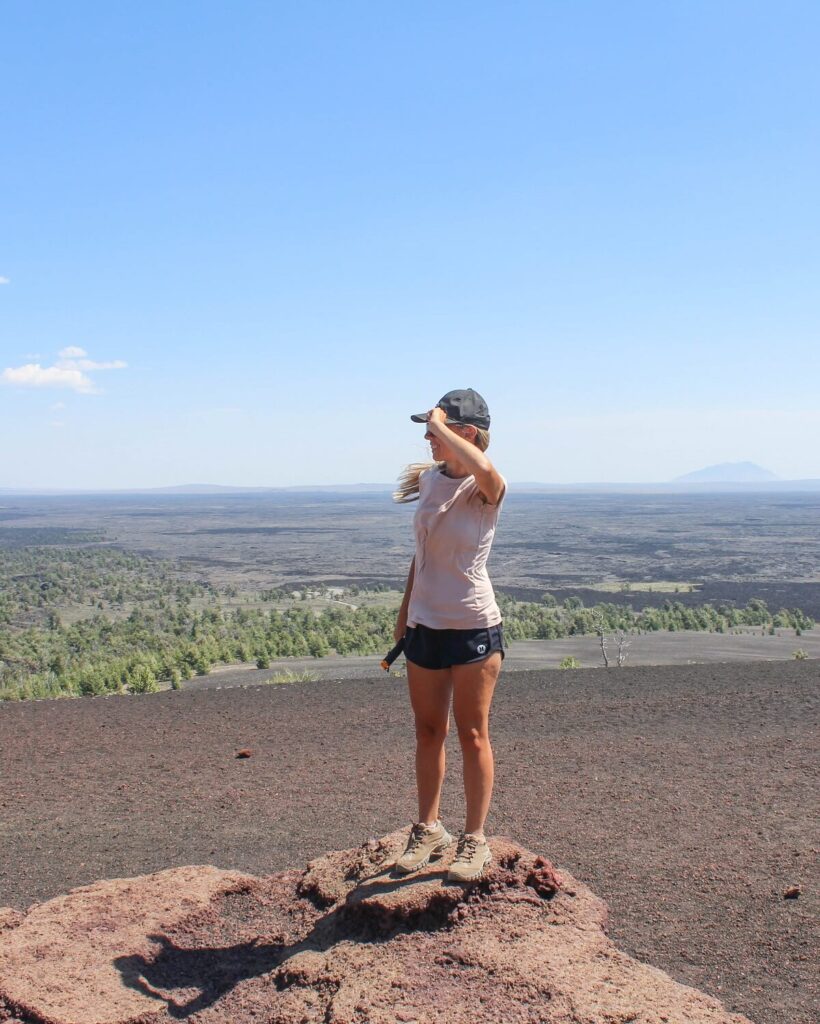
Inferno Cone is a huge cinder cone at the center of Craters Of The Moon National Monument. At the top of the 6,181 foot summit of Inferno Cone are spectacular views of the vast moon-like landscape that is Craters of the Moon.
The panoramic views from the top include an overview of the volcanic area preserved by Craters of the Moon and you’ll be able to see other massive cinder cones, spatter cones, and expansive old lava flows.
Miles and miles can be seen in every which direction across Southern Idaho and you will even be able to catch a glimpse of Central Idaho’s Pioneer Mountains to the north and the Lost River Range in the northeast.
The hike up is steep without any switchbacks but because the trail is so short it is easily doable by all ages and fitness levels.
If you only have time to do one thing at Craters Of The Moon, make the time to hike up Inferno Cone!
>>Read: Hiking Up Inferno Cone: A Summit With The Best Views Of Southern Idaho
4. Take A Stroll Through Devil’s Orchard
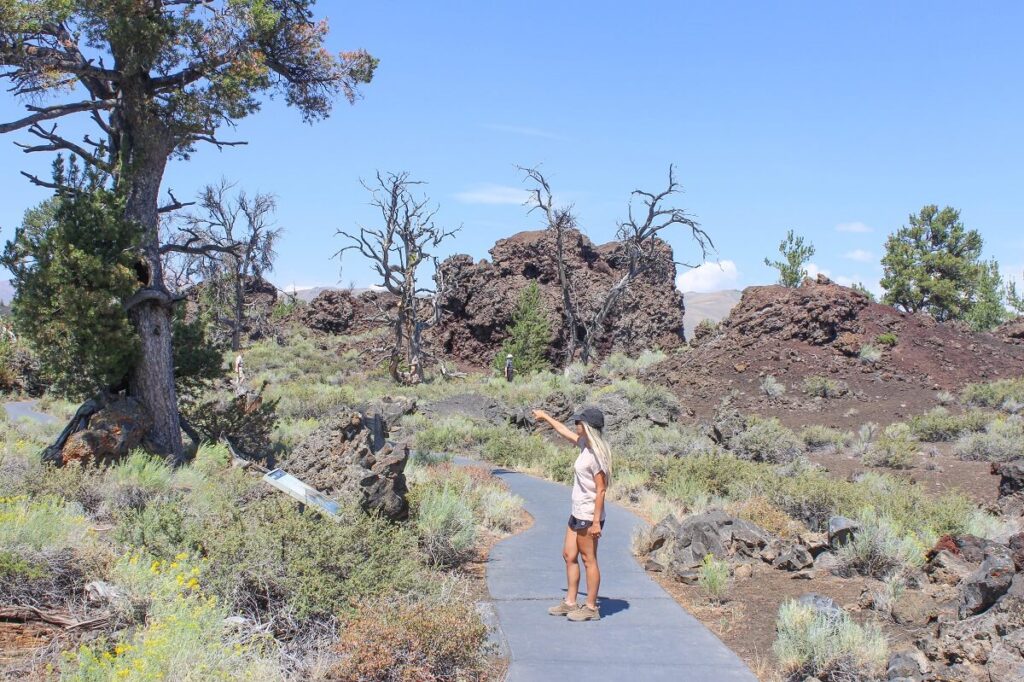
The Devil’s Orchard is a bizarre landscape made up of lava flows, lava rocks, and oddly shaped trees. Some notable features of Devil’s Orchard is the collection of lava fragments sitting amidst beds of cinders and examples of standing and fallen trees among volcanic rocks.
There are numerous informative exhibits along the nature trail that explain the strange geology of this environment.
This trail is only 0.5 miles (0.8km) in length and is paved the entire way. If you are looking for something to do at Craters of the Moon that won’t take up much time, this trail is easy and only requires about fifteen minutes to complete.
>>Read: Devil’s Orchard Nature Trail: An Easy Hike At Craters Of The Moon
5. Explore The Spatter Cone

The trail up the Spatter Cone is one of the most unique hiking trails you will ever come across. The hike up is completely paved and winds around the outside of a dormant spatter cone before entering its vent.
Inside the spatter cone is a large gaping hole where lava spewed out some 2,000 years ago. There is a fence around the hole so that visitors don’t fall in so it is safe for children to hike up.
The trail is only 0.1 miles so there is really no reason not to do it. You never know when the next opportunity to walk inside a mini volcano will come along.
6. Discover Hidden Lava Caves
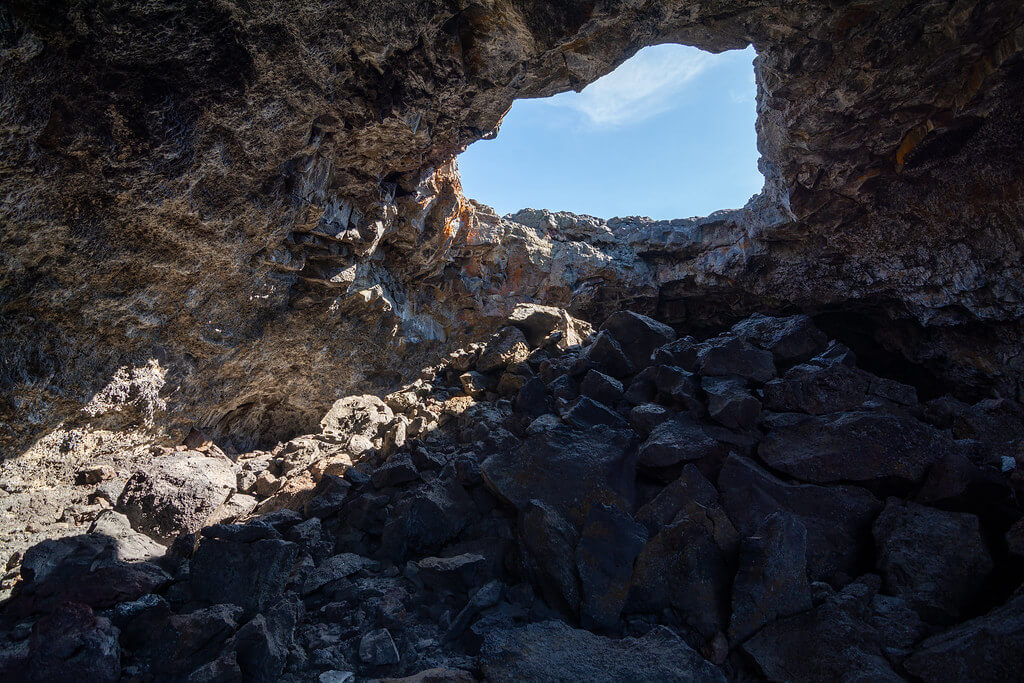
While there are many unique and interesting features at Craters of the Moon, none are more fascinating than the park’s lava caves.
There are five caves in total that are open to the public. The caves that are open to the public are named:
- Indian Tunnel
- Dew Drop Cave
- Boy Scout Cave
- Beauty Cave
- Buffalo Cave
The first four caves can be accessed by walking the Caves Trail, an easy trail about two and a half miles long.
Buffalo Cave can be reached via the Broken Top Loop Trail which is an uneven trail made of lava debris.
Some of the caves are beginner friendly to visit like Indian Cave which has ladders that help hikers descend into it. This cave is the largest tube measuring 30 feet tall and 800 feet long with several huge skylights that let sunlight in so you won’t need a flashlight.
Other caves are more difficult to access such as Boy Scout and Buffalo Caves. For example, the entrance to Boy Scout Cave is so small you have to crawl inside and barely have room to stand.
Inside the caves are colonies of bats. These bats are vulnerable to a deadly fungus that causes White Nose Syndrome. While humans aren’t susceptible to the disease, they are carriers for the fungus. For this reason, cave permits are only granted after visitors go through a screening process with park staff first at the Visitors Center.
If you plan to visit the caves, come prepared with the correct clothing and flashlights. Rangers at the park can help with any questions you may have about venturing into the caves. Permits are free! The cave area is the final stop on the seven mile loop road.
7. Go Stargazing
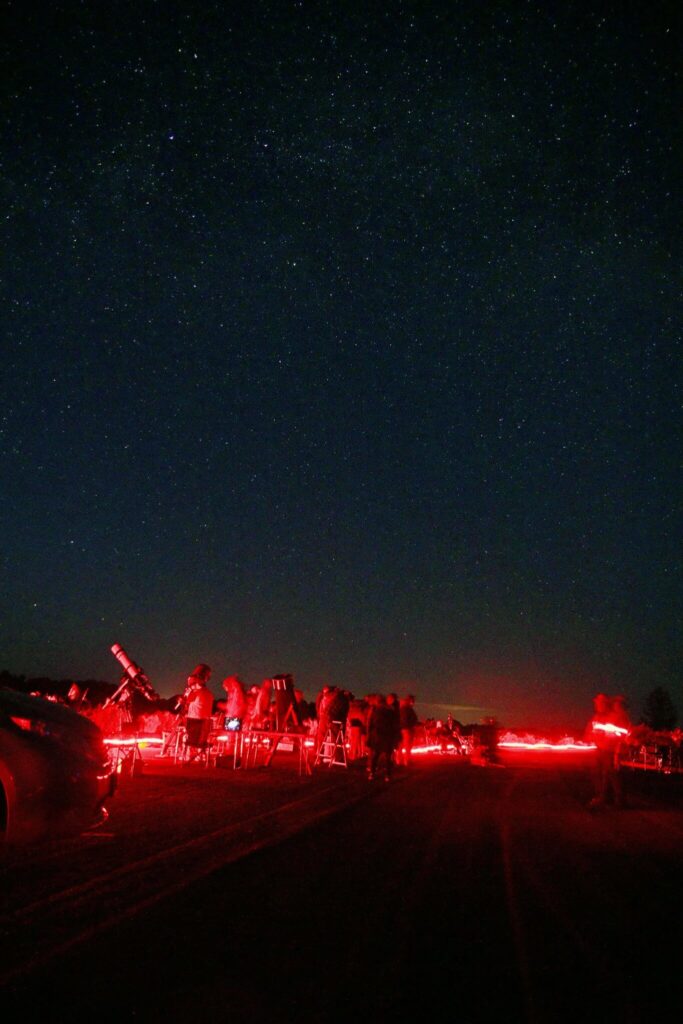
Craters of the Moon has some of the darkest skies in the national park system and there is no better place to go stargazing in Idaho!
The reason for the park’s dark skies is because the area sits at the edge of one of the largest remaining pools of natural nighttime darkness in the lower 48 states. The rugged wilderness of Idaho has historically deterred settlement and development in the Idaho interior which has so far kept light pollution levels low around these parts.
One of the best ways to enjoy these dark skies is to go for a night hike. The Devil’s Orchard Trail and the Inferno Cone are both suitable for night hiking because the trails are so short and don’t require much navigating which means you’ll have plenty of time to look up.
Visitors can also join ranger-led full moon hikes and other night sky programs. Be sure to check the Visitor Center for programs and schedules.
If you plan to camp inside the park, no need to go for a night hike though. Just set up camp chairs under the stars, get cozy beneath a blanket, and be prepared to be mesmerized.
According to the national parks rangers at Craters of the Moon, night sky viewing is best one hour after sunset.
8. Go Camping On A Sea Of Lava

Imagine camping among a sea of lava surrounded by pitch black cooled lava rocks. There aren’t many places in the world where you can experience such a thing but at Craters of the Moon you can!
The Lava Flow Campground is situated amid an old lava flow and each site is surrounded by jagged basalt rocks. There are some plants like sagebrush and a few scattered trees but as a whole the area is barren and has a very desolate feel to it.
Camping among this volcanic environment is definitely one of the most unique experiences in the world.
The 42 site Lava Flow Campground is available on a first come, first served basis. It is only accessible by vehicle from May to October and visitors can snowshoe in during the winter. Some sites can accommodate RVs but note there are no hookups. Each site has a picnic table and charcoal grill.
Campsites cost $15 per night during the summer and $8 per night during the shoulder season when the water is turned off.
Accommodations are scarce around Craters of the Moon so it’s a good thing the campground is there. The nearest lodging to Craters of the Moon is in Arco.
Other Places To See Near Craters Of The Moon
- Box Canyon State Park: A large canyon with the 11th largest spring in the U.S.
- Malad Gorge: A deep canyon with a 60 foot thundering cascade named Devil’s Washbowl.
- Thousand Springs Scenic Byway: A fascinating drive through Southern Idaho.
- Twin Falls: The largest city in Southern Idaho.
- Dierkes Lake: A lake near Shoshone Falls that’s great for swimming.
Recommended guide books
Pin For Later!


Join our facebook travel group for weekly USA destination inspiration!